Showing posts with label Choice. Show all posts

Thursday, January 14, 2016

Biofuel - Are US EPA Goals Realistic?

Source: http://www.industrial-nanotech.com/wp-content/uploads/2015/09/CB_biofuel.jpg

Many of you may not know that the United States Environmental Protection Agency (US EPA) has a Renewable Energy Standard as part of the National Energy Policy Act of 2005, that states 1:
The RFS program is a national policy that requires a certain volume of renewable fuel to replace or reduce the quantity of petroleum-based transportation fuel, heating oil or jet fuel. The four renewable fuel categories under the RFS are:

        • Biomass-based diesel
        • Cellulosic biofuel
        • Advanced biofuel
        • Total renewable fuel

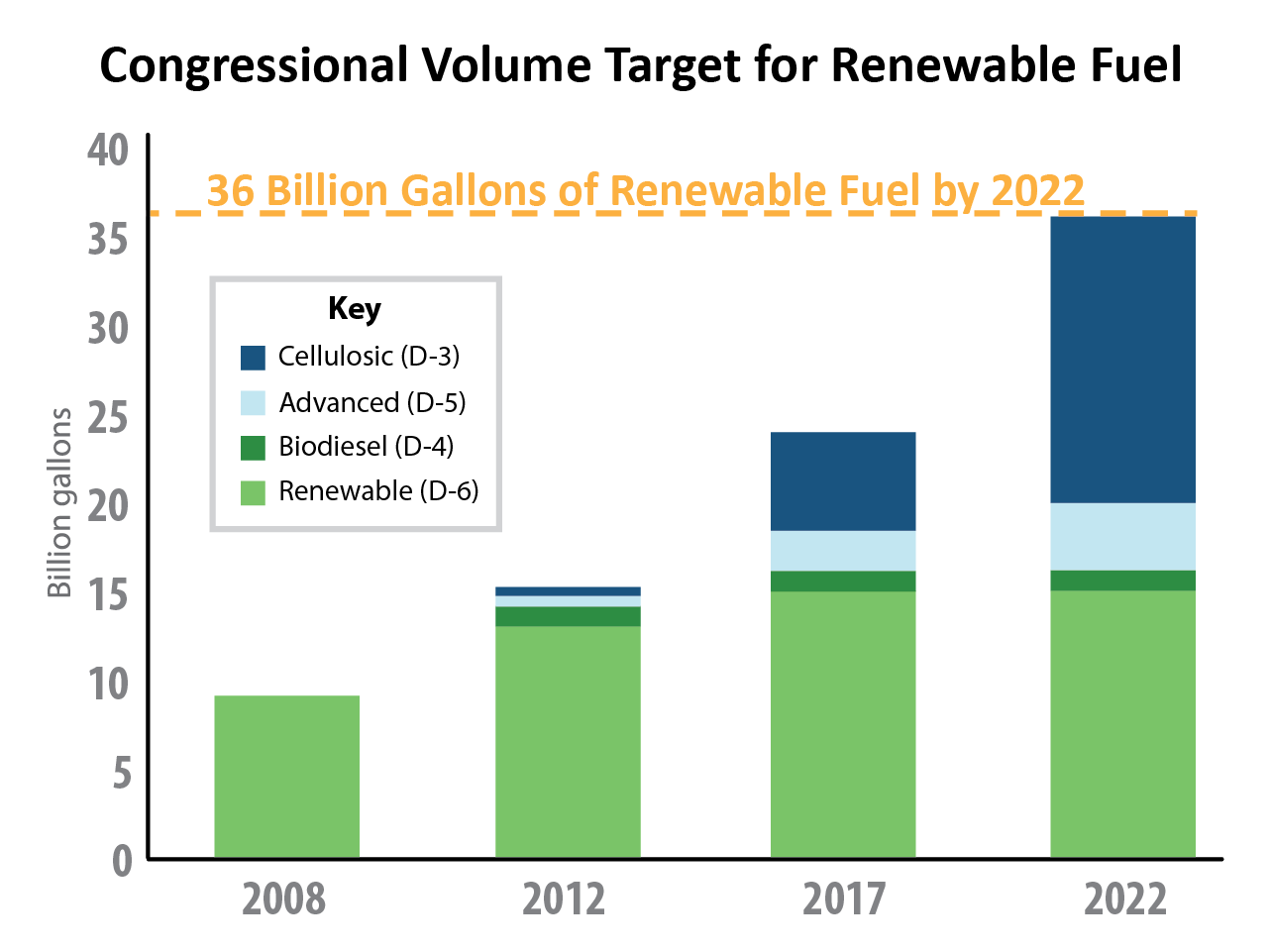
With the following goal of 36 Billion Gallons of Renewable Fuel by 2022:
Source: http://www.epa.gov/sites/production/files/2015-09/congressional_volume_target-02_0.png

With these standards, it sounds like a great goal, right? Meaning that the "renewable fuel" needs to reduce the Lifecycle Greenhouse Gas Emissions by 20%; Advance and Biodiesel by 50%; and, Cellulosic Fuels by 60%

Source: http://www.epa.gov/sites/production/files/2015-09/lifecycle_ghg_emissions-03.png

Yet, where and how are we sourcing these fuels? Where do they come from? Algae, corn, food compost?? Well, on top of some of the algae posts I have done recently, yesterday the University of Illinois published a paper in Nature Energy talking about utilizing second-generation crops as a source for such biofuels 2:

Second-generation biofuels are much cleaner than corn ethanol thanks to a number of biological characteristics, said [Evan] DeLucia, a professor of plant biology at the U. of I. In a 2011 study, DeLucia used a model to show what would happen if the land being used to grow corn for ethanol production was instead converted to Miscanthus and switchgrass."Our results were staggering," DeLucia said.  
"Our results were staggering," Delucia said. "Since both of those plants are perennial, you don't till every year, so you release less carbon to the atmosphere. The grasses also require less fertilizer, which is a source of nitrous oxide, and they store more carbon in the ground than corn." 
 [... Before second-generation biofuels can have an edge] the market for biofuel needs to grow, meaning the amount of cars that can take high ethanol fuel needs to increase, and biofuel producers need to be certain that the policy will stay intact 
Sounds great, yes? Yeah, I thought so too! It sounds great that we can start to utilize more options for biofuel to decrease the societal dependency on fossil fuels, as well as decreasing the emissions that deplete our biosphere protection. Yet, more questions began to metaphorically burn in my mind. 36 billion gallons of biofuel sure sounds like a lot, so how many gallons does the US go through in a year, and how many gallons do we think we're going to use in 2022, when this 36 billon gallons of biofuel is supposed to be met? Let's go back to the volume goals of biofuel, in accordance to the EPA Energy Policy Act 1, and how much fuel is currently being consumed by USA citizens, in accordance to the US Department of Energy 3:
In 2014, about 136.78 billion gallons1 (or 3.26 billion barrels) of gasoline were consumed2 in the United States, a daily average of about 374.74 million gallons (or 8.92 million barrels).3
1 There are 42 U.S. gallons in a barrel.  
2 EIA uses product supplied to represent approximate consumption of petroleum products. Product supplied measures the disappearance of these products from primary sources, such as refineries, natural gas processing plants, blending plants, pipelines, and bulk terminals.  
3 Preliminary data for 2014. 
Woah, woah, woah... in 2014, the USA consumed 137 BILLION gallons of gasoline?? And the goal by the US EPA is 36 billion gallons of biofuel by 2022?? Even, if the EPA Renewable Energy Standard was put into place back in 2014, it's only 26.31% of the total fuel consumed in the United States. The scary thing is to realize that the fuel consumption, by the USA alone, has only increased since 2014. Are the US EPA Biofuel Goals Realistic? Honestly, I don't think so...

Based on a report by the US Department of Energy (US DoE) in 2004, the projection of fuel consumption were to increase up to 7% each year, resulting in 250 billion gallons by 2022 4. Now, this was nearly twelve years ago that the report was completed. However, it was reviewed again in 2013 by the US DoE Energy Information Administration, which provided another projection of 3.9% average yearly increase of consumption, resulting in a projection of 186.05 billion gallons of fuel consumed in 2022 5... So, if we do meet the 36 billion gallons of biofuel as mandated by the Biofuel Energy Standard in 2022, that's only 19.34% of the total fuel projected to be consumed.

This is not to say that the investigations of biofuels aren't worth while, or are a moot point. Quite the contrary! Looking for alternative energy sources that are less damaging to our atmosphere and environment is entirely necessary. Yet, supposing the bigger and more applicable question is: What can we do about the energy situation? Frankly, humans need to decrease the amount of energy is consumed. It's that simple. Humans cannot continue to consume the amount of energy and resources on Earth at the rate we are doing so, and expect to support an exponentially growing population.

If you're feeling brave enough, try this: consider what your footprint is. Go around your house and look at all the items you have that requires energy (electricity, petrol, or gas) and try to calculate how much you consume each day and average your year's consumption. How can you reduce your own consumption of energy? 

Source: https://blogger.googleusercontent.com/img/b/R29vZ2xl/AVvXsEiYEoRkoAtfgSNUf7-_R0ESQ_NTg5uNSCk-t6JN5XS6eQvvIRyrzdl5dkV3g1my3lac7_GNeSCzSrUG4-0C946y6ZCILaU56y_Wt2ARzlVHPFKYY4AwxHzsFSLALXxO46bYqL3R8hU8XQ7q/s1600/reduceenergyuse.jpg

Sources:

1) US EPA. "Program Overview for Renewable Fuel Standard Program." EPA. Environmental Protection Agency, 28 Sept. 2015. Web. 14 Jan. 2016. http://www.epa.gov/renewable-fuel-standard-program/program-overview-renewable-fuel-standard-program.

2) University of Illinois at Urbana-Champaign. "Second-generation biofuels can reduce emissions." ScienceDaily. ScienceDaily, 11 January 2016. www.sciencedaily.com/releases/2016/01/160111121025.htm.

3) US EIA. "U.S. Energy Information Administration - EIA - Independent Statistics and Analysis." How Much Gasoline Does the United States Consume? US DoE, 12 Mar. 2015. Web. 14 Jan. 2016. http://www.eia.gov/tools/faqs/faq.cfm?id=23&t=10.

4) US EIA. "Annual Energy Outlook with Projections to 2025-Market Trends - Oil and Natural Gas." Annual Energy Outlook with Projections to 2025-Market Trends - Oil and Natural Gas. US DoE, 26 Nov. 2004. Web. 14 Jan. 2016. <http://www.hubbertpeak.com/us/eia/2004/>. 

5) US DoE. "The U.S. Economy to 2022: Settling into a New Normal : Monthly Labor Review: U.S. Bureau of Labor Statistics." U.S. Bureau of Labor Statistics. U.S. Bureau of Labor Statistics, 2013. Web. 14 Jan. 2016. <http://www.bls.gov/opub/mlr/2013/article/the-u-s-economy-to-2022-settling-into-a-new-normal.htm>.
 

Thursday, December 31, 2015

Climate Change... Urged by Economy??

Source: http://dailyguideafrica.com/wp-content/uploads/2015/12/Global-Warming-Climate-Change.jpg


After all the hype of COP21 and the UN Climate Change Conference in Paris, I was anxious to hear about the final results -- what happened? -- after seeing image after image of some form of success, what does it mean? Honestly, after much digging and sifting through web searches, this is the best recap I can find from the UN FCCC Website:


On one hand, it seems wonderful that we have finally reached a point in which our leaders acknowledge the need for change. Yet, one question still remains: What is our course of action? According to the COP21 Website:

Why is this agreement historic and why will 12 December 2015 be remembered as a great day for the planet?
It has been widely recognised, with unanimous agreement from scientists, that the earth’s atmosphere is growing warmer due to greenhouse gas emissions generated by human activity. The aim of the Paris Conference that was held from 30 November to 12 December at the Le Bourget exhibition centre was to come up with a response to this problem, which is threatening to wipe out the human presence in certain parts of the world.
Keeping the rise in temperature below 2°C
This agreement marks a change in direction, towards a new world. It confirms the target of keeping the rise in temperature below 2°C. Scientists believe that a greater increase in temperature would be very dangerous. The agreement even establishes, for the first time, that we should be aiming for 1.5°C, to protect island states, which are the most threatened by the rise in sea levels.
How can we manage to avoid global warming?
By 12 December 2015, 186 countries had published their action plan (further information); each of these plans sets out the way in which they intend to reduce their greenhouse gas emissions. The UN body that deals with climate change (the UNFCCC*) published an evaluation of these contributions on 1 November 2015 (further information). This study showed that despite the unprecedented mobilization shown by States, at this rate global warming would still be between 2.7°C and 3°C, i.e. above the threshold set by scientists.
The Paris agreement therefore asks all countries to review these contributions every five years from 2020; they will not be able to lower their targets and are encouraged, on the contrary, to raise them.
In addition, emissions should peak as soon as possible and the countries will aim to achieve carbon neutrality in the second half of the century. This is a real turning point. We are going to gradually stop using the most polluting fossil fuels in order to reach this goal.
And just how are the governments going to do this? Oh, well, they're supposed to implement carbon mitigation to reduce the current carbon emissions that are contributing to the environment with the goal of keeping global temperature rising below 2ÂșC. Let's face it though - no government or business is going to do this without incentive and to their benefit - the economy and money will have the final toll on whether or not this is going to happen. So, the UN has devised the following incentive for financial purposes; according to the UNFCCC Paris Agreement:

"[COP 21] Recognizes the importance of adequate and predictable financial resources, including for results based payments, as appropriate for the implementation of policy approaches and positive incentives for reducing emissions from deforestation and forest degradation, and the role of conservation, sustainable management of forests and enhancement of forest carbon stocks; as well as alternative policy approaches, such as join mitigation and adaptation approaches for the integral and sustainable management of forests; while reaffirming the importance of non-carbon benefits associate with such approaches; encouraging the coordination of support from inter alia, public and private, bilateral and multilateral sources, such as the Green Climate Fund, and alternative sources in accordance with relevant decisions by the Conference of Parties." - Paragraph 55

Really?? Are we really putting the economy before the health and well-being of the planet we live on? This is where I think back to the many lectures of Dr. David Suzuki:


So, what are we, as people on the ground, the front line, going to do about it? Well, a number of things can be done, though what is really going to make a difference? How about taking a real close look at our lives, and our lifestyle. Do you know the actual impacts of what you buy? Before you purchase something, do you think about what message you are sending to the overarching 'powers-that-be' that control industry, our economy, and the world we live in? Perhaps what we really need is a social revolution - one that reconsiders the way we live our lives - yet, this is going to require change at a real, true, fundamental level... because, continuing to do what we're doing is a form of madness. Doing the same thing over and over, expecting different results, is madness.

It's time to stop rewarding negative behaviour with positive incentives (i.e. money, tax reductions, "green" labeling, etc.). Can we really leave the future of our planet in the hands of people that are influenced by money? What price would you put on the world your future grandchildren will have??

2016 is nearing and a time that many people start to consider what direction they want their lives to go in the next year, five years, or ten years. Perhaps it's time to start thinking about the present day, for the benefit of that future.

Monday, November 30, 2015

UN Climate Change Conference in Paris, COP21: USA & China

Source: https://blogger.googleusercontent.com/img/b/R29vZ2xl/AVvXsEhAxF3AmusXZ-xq-unhph73LgZgsAIUfGY8EFUtCPQQm79AenC_jCtDKpexavMsh_oSOxrZsisHeFknZjvKReGjtC3VcnVec9XB2rskV9ygR23jooP1bzLis5taDFrPRujDGRCXTkfBqh4/s1600/Logo+COP21+Paris+Climat+2015.jpg


US President Barack Obama has delivered a speech at the COP21 meeting, saying that he hoped the Paris summit can be a "turning point” in the fight against climate change.


Experts say cooperation between China and the US is crucial if there's to be progress at the climate change conference in Paris. The two countries have the largest economies in the world, but are also the two largest emitters of greenhouse gases. Each exerts a different influence on nations around the world trying to reduce emissions and reach the ambitious targets Paris has set.

Friday, November 27, 2015

Blue-Green Algae, A Source of Power?


Blue-green algae (stock image).
Credit: © laurent dambies / Fotolia
Most people that know me, know that I am a little bit obsessed with algae... they are the most amazing organisms on the planet (in my opinion). They're responsible for our environment as we know it - early microorganisms, especially cyanobacteria, were the first living organisms on this rock, flying around the Sun - and without them, life today wouldn't exist. Now, this is not to say that there are other really fantastic organisms out there, or that life wouldn't have evolved in any other way, because that would be an incorrect statement. It just so happens that Stromatolites are the earliest records we have found for life on Earth, dating 3.5 Billion Years Ago.

Now, what in the world does this have to do with today's blog? Well, my friends, the United Nations Conference on Climate Change is having it's next meeting in Paris from November 30th through December 11th, 2015. And, a team from Concordia University in Montreal might have found an answer to the ever-going question of how we can reverse our dependence on fossil fuels: Cyanobacteria, also known as blue-green algae!! Once again, my beloved algae come to the forefront of the survival of Earth!! These wonderful organisms are found everywhere, are found in some of the most hardy environments as well adapted extremophiles, and produce energy through photosynthesis, nitrogen fixation, and respiration; cyanobacteria are arguably the most successful group of microorganisms on earth!! While the details of technology are continuing to work on a sustainable source of harvesting these little power houses.

As published in Science Daily, A New Green Power Source:
"By taking advantage of a process that is constantly occurring all over the world, we've created a new and scalable technology that could lead to cheaper ways of generating carbon-free energy," says Packirisamy [lead engineering professor at Concordia University].
He notes that the invention is still in its early stages. "We have a lot of work to do in terms of scaling the power cell to make the project commercial."
Currently, the photosynthetic power cell exists on a small scale, and consists of an anode, cathode and proton exchange membrane. The cyanobacteria or blue green algae are placed in the anode chamber.
As they undergo photosynthesis, the cyanobacteria release electrons to the electrode surface. An external load is connected to the device to extract the electrons and harness power.
As Packirisamy and his team develop and expand the project, he hopes that the micro photosynthetic power cells will soon be used in various applications, such as powering cell phones and computers. And maybe one day they'll power the world.
And what comes to mind is the Wicked Witch of the West, stirring her crystal ball (which looks like it has algae in it, by the way!), in the Wizard of Oz, substituting her words for "Continue to flourish, my little green beasties, flourish!!!"
https://i.ytimg.com/vi/KnMa652dZ5E/hqdefault.jpg
Source: https://i.ytimg.com/vi/KnMa652dZ5E/hqdefault.jpg

Tuesday, May 5, 2015

"Who Wants Change" Cartoon

This depicts the very message of yesterday's post:


http://wp.production.patheos.com/blogs/exploringourmatrix/files/2015/01/Who-Wants-Change.jpg

Monday, May 4, 2015

Climate Change - It's Happening!

http://www.trbimg.com/img-50ca1a5a/turbine/la-tot-cartoons-pg-blind-faith-of-climate-change-deniers-endangers-us-all/600


Climate Change is becoming a big topic for many people, politicians, and government authorities. In truth, it is a big concern for the future of our planet, and the empirical data is undeniable from researchers around the world. And yet, it is becoming such a buzz word, that it's meaning and impending urge for human change is losing it's significance... Climate change is a complex issue, and like it or not, humans are contributing to to it.

The United Nations (UN) formed an international treaty in 1992, "to consider what they could do to limit global temperature increases and the resulting climate change, and to cope with its impacts". In 1995, many of the participating countries realized that emission reductions enforced from the 1992 treaty were inadequate. Two years later, in 1997, the Kyoto Protocol was adopted with the intent to legally bind participating countries to emission reduction targets. The first commitment period started eleven years later in 2008, and the second is to start in 2013.

The UN Climate Summit was created to oversee the world's climate negotiations, to prevent climate breakdown by limiting the amount of greenhouse gases that are released. The first offender of climate breakdown is the use of fossil fuels, and the idea was to constrain the use or consumption of these resources. While their efforts are appreciated, what change has really happened since 1992 to decrease emissions that degrade our greenhouse gases?

In the 2014 UN Climate Summit in Lima, there was much talk about utilizing the remaining resources for economic profit. And, last month the UK instated the Infrastructure Act that maximizes the economic recovery of petroleum products, legally binding our future business to squeeze every drop out of the land. Unfortunately, this will become a battle of resources in the future, pushing the largest price on consumers for the gain or benefit of the those in control and in power of the petroleum industry... Is this really leading us towards the mission statement of the UN Climate Summit?

As stated by George Monbiot in his article "Applauding Themselves to Death":
Obama explained that “I don’t always lead with the climate change issue because if you right now are worried about whether you’ve got a job or if you can pay the bills, the first thing you want to hear is how do I meet the immediate problem?”(17)
Money is certainly a problem, but not necessarily for the reasons Obama suggested. The bigger issue is the bankrolling of politics by big oil and big coal(18), and the tremendous lobbying power they purchase. These companies have, in the past, financed wars to protect their position(19); they will not surrender the bulk of their reserves without a monumental fight. This fight would test the very limits of state power; I wonder whether our nominal democracies would survive it. Fossil fuel companies have become glutted on silence: their power has grown as a result of numberless failures to challenge and expose them. It’s no wonder that the manicured negotiators at the UN conferences, so careful never to break a nail, have spent so long avoiding the issue.

And yet, back on 19 March 2015, USA President Obama signed executive orders to reduce the greenhouse gas emissions of US agencies. While the US Federal Agencies have decreased their contribution by 17%, most of these changes cost money.
 “For federal agencies who are looking at how to cover their energy needs, this is a very pragmatic dollars-and-cents issue,” said Brian Deese, a senior adviser to Mr. Obama. “If they can consume less energy or they can consume renewable energy that is cheaper, more reliable or more sustainable, then they can achieve their environmental goals while they are saving money.” Further information can be read from the New York Times Article: Obama Orders Cuts in Federal Greenhouse Gas Emissions

Video provided by: Newsy Science on YouTube 

From a perspective of food resources, published by Reuters:
ROME (Thomson Reuters Foundation) - Global warming could cause an 18 percent drop in world food production by 2050, but investments in irrigation and infrastructure, and moving food output to different regions, could reduce the loss, a study published on Thursday said.

Globally, irrigation systems should be expanded by more than 25 percent to cope with changing rainfall patterns, the study published in the journal Environmental Research Letters said.

Where they should be expanded is difficult to model because of competing scenarios on how rainfall will change, so the majority of irrigation investments should be made after 2030, the study said.

"If you don't carefully plan (where to spend resources), you will get adaptation wrong," David Leclere, one of the study's authors, told the Thomson Reuters Foundation.

Infrastructure and processing chains will need to be built in areas where there was little agriculture before in order to expand production, he said.

International food markets will require closer integration to respond to global warming, as production will become more difficult in some southern regions, but new land further north will become available for growing crops.

Based on the study's models, Leclere expects production to increase in Europe, while much of Africa will remain dependent on imports.

If climate change is managed correctly, food production could even rise 3 percent by 2050, the study said, as a higher concentration of carbon dioxide in the atmosphere has a fertilizing effect on plants.

Managing water resources is expected to be the biggest challenge for farmers steming from climate change.

Water "may become dramatically scarcer much earlier than previously thought," Michael Obersteiner, another study co-author, said in a statement. (Reporting By Chris Arsenault; Editing by Tim Pearce)
 Yes, climate change go beyond a nebulous thought of 'someday' - the effects are here, measurable, and impacting our daily lives - and, we have yet to see the change that is truly necessary to make a difference. Let us open our eyes, review our daily habits, and see where we are contributing to the economic mechanism driving this madness.

"Insanity: doing the same thing over and over again, and expecting different results." ~ Albert Einstein

Monday, February 23, 2015

Reducing Food Waste

http://www.savethatstuff.com/wp-content/uploads/2014/10/Food-Waste.jpg
Source: http://www.savethatstuff.com/wp-content/uploads/2014/10/Food-Waste.jpg

After the last post, 'What Are We Doing With Our Waste?', the value of 46% of global waste being organic instigated a series of questions about the way food is handled for the economically privileged countries due to the chain of supply. Interestingly enough, an article published this past October answers a good number of these questions in the USA. Author, R. P. Siegel wrote 'Food Waste is a Bigger Problem Than You Think' :
"Food waste is a horrendous problem in the [USA] that no one seems to want to talk about. Yet food is the one product type that everyone consumes, and while a surprising number of people don’t have it, those that do are shockingly wasteful. As recently as 2012, close to 50 million people experienced food insecurity, not in Africa or Bangladesh, but right here in the USA. Worldwide, that number is over 1 billion people.
That makes the fact that somewhere between a quarter and a third of all food produced worldwide is never eaten all the more shocking. America is the worst offender by far. Here in the states, the portion of food production that goes to waste is closer to 40 percent.
A report by the National Consumer League, called Wasted: Solutions to the American Food Waste Problem, came out last week. It maps the magnitude of the problem and, as the title suggests, offers a number of practical suggestions.
Let’s start with a look at the problem. Most of the food waste in the developing world occurs in the supply chain. Either the farmers suffer crop failures due to weather, insects or disease, or they are unable to harvest the crops efficiently due to inadequate equipment. Inefficient transportation and lack of refrigerated trucks lead to more losses in transit. Consumers, despite the lack of refrigeration, waste less food since they have so little to begin with and they value it.
The situation is inverted in developed countries. Consumers waste more food. American consumers waste 10 times as much food as their counterparts in Southeast Asia.
Why do we waste so much? Well, one reason is because it’s become so cheap. Americans today spend only 6 percent of their total household expenditures on food. Back in 1982 that number was 12 percent. But, as the saying goes, perhaps you get what you pay for. According to Nadya Zhexembayeva, in her book “Overfished Ocean Strategy,” the nutritional value of American food has been declining dramatically. A study of 43 vegetable crops over the period from 1950-1999 shows declines of 20 percent in Vitamin C, 15 percent in iron and 38 percent in riboflavin. American food waste has risen by 50 percent since the seventies at the same time that prices and nutrition have declined. Today’s American family of four throws away anywhere from $1,350 to $2,275 worth of food each year. Put that all together and we are looking at $165 billion, as a nation, being wasted.
The energy, water and land implications of this are enormous. In essence, this means that at a time of increasing resource scarcity, 20 percent of our land, 4 percent of our energy and 25 percent of our water is used to produce food that ends up being thrown out.
Unfortunately, the story does not end once that wasted food is grown. After the plates are scrapped and refrigerators cleaned out, the food in the trash bin must be hauled to the landfill, costing more energy, where it ultimately breaks down into methane, a highly potent greenhouse gas. One study in the U.K. found that eliminating all food waste from landfills would be equivalent to taking 1 in 4 cars off the road. One has to wonder: If the true environmental cost of our food were priced in, would we be so willing to waste it?
Hunger in the streets will not simply be solved by reducing waste, but the report tells us that, if we could reduce our level of waste by 30 percent, that would be enough food to feed our 50 million hungry. If only we could get it to them.
So, much for the bad news, though it surely represents opportunities for those with a mind to address them. Let’s take a look at some of the solutions.
Addressing the food waste issue requires a multifaceted approach. First, retailers need to move away from the buy-one-get-one-free mentality. That might be a good way to move product, but much of it gets moved right into the landfill with a brief stopover in the home. That used to be considered acceptable as long as the company was generating profits. Those days will soon be gone. Attitudes can also change about food that is less attractive but still perfectly safe to eat. Perishable foods near expiration can be sold at marked down prices where, if used promptly, it can provide excellent value. More retailers can participate in programs to donate overstock foods to those who are hungry.
But the biggest opportunities are with consumers. Perhaps the biggest barrier is consumer attitudes. Because of the fall in food prices, food is not valued as it was in earlier times. People need better information about how to store foods properly and expiration dates must be clearly labeled. Labels should indicate the date at which food will become unusable.
Perhaps tomorrow’s refrigerators will scan the inventory as they are being stocked and issue reminders such as this one. “Expiring tomorrow: milk and cheese. Use it while it’s still good.”
Public education programs aimed at reducing food waste have been quite effective in Europe. The U.S. EPA has a food recovery hierarchy that spells out the most effective use of unusable food — starting with donating it and ending with composting. Rochester, New York-based Epiphergy followed this hierarchy in its extensive food waste recovery program. Middle stages include producing animal feed, followed by energy.
Cities can help by providing composting services and also by charging for waste collection by the pound instead of using a flat rate. That would encourage people to think twice before throwing things away.
These are all small steps. But when people understand the larger picture that ties them all together, it changes their attitude and their behavior. Experiences in Europe have proven that out. We need to raise awareness here and set ambitious targets for food waste reduction and we need to do it soon."

A few years ago, an interesting documentary about wasted food feeding a family from Trader Joes' Waste:


Spoils: Extraordinary Harvest from Alex Mallis on Vimeo.

Monday, February 16, 2015

What Are We Doing With Our Waste?

http://img.timeinc.net/time/daily/2009/0907/360_plastic_ocean_0731.jpg
Source: http://img.timeinc.net/time/daily/2009/0907/360_plastic_ocean_0731.jpg
When plastics were invented, it transformed the world. It is light, durable, and malleable to create many products that humans utilize.  For many years, modern-day plastics were praised and thought of as a great alternative to glass.  However, with more understanding and awareness of how toxic it can be, such as BPA, and DEHP, many people are becoming more skeptical of container plastic.  Yet, few people are looking at whether or not the plastic they're purchasing can be recycled.  Just think about all the plastic you buy - water bottles, take-away food, toys for children, women's' hairbands, piping for water, wrapping of vegetables, coating of wires - it is everywhere!  But what happens to that plastic when we're done with it?  Well, according to Dr. Jenna Jambeck at the University of Georgia - "8 million metric tons of plastics are entering the oceans every year" - a study utilizing scientific calculations to quantify the amount of plastics entering the ocean, reported on 12 February 2015:
"... found between 4.8 and 12.7 million metric tons of plastic entered the ocean in 2010 from people living within 50 kilometers of the coastline. That year, a total of 275 million metric tons of plastic waste was generated in those 192 coastal countries.
Jambeck, an assistant professor of environmental engineering in the UGA College of Engineering and the study's lead author, explains the amount of plastic moving from land to ocean each year using 8 million metric tons as the midpoint: "Eight million metric tons is the equivalent to finding five grocery bags full of plastic on every foot of coastline in the 192 countries we examined."
To determine the amount of plastic going into the ocean, Jambeck "started it off beautifully with a very grand model of all sources of marine debris," said study co-author Roland Geyer, an associate professor with the University of California, Santa Barbara's Bren School of Environmental Science & Management, who teamed with Jambeck and others to develop the estimates.
They began by looking at all debris entering the ocean from land, sea and other pathways. Their goal was to develop models for each of these sources. After gathering rough estimates, "it fairly quickly emerged that the mismanaged waste and solid waste dispersed was the biggest contributor of all of them," he said. From there, they focused on plastic.
"For the first time, we're estimating the amount of plastic that enters the oceans in a given year," said study co-author Kara Lavender Law, a research professor at the Massachusetts-based Sea Education Association. "Nobody has had a good sense of the size of that problem until now."
The framework the researchers developed isn't limited to calculating plastic inputs into the ocean."

What is your plastic footprint? Do you know where your rubbish/garbage goes?  Unfortunately, more and more of our rubbish is going into the ocean.  The fact is, we are running out of land to bury our non-renewable or recycle-able wastes and more of it is getting into the oceans each year.  In 2012, the World Bank reviewed the world rubbish and published "What a Waste: A Global Review of Solid Waste Management"

According to this report, places considered to be 'high income', such as countries within the European Union, Canada, the USA, New Zealand, and Australia have an average of 1.2 kg (2.64 lb) of garbage, per person, per day; about 44% of the worlds waste generation every day.  That's a significant amount of waste that goes into landfills, dumps, and thermal disposal!!  Sadly, only 1 - 19% of the solid waste generated goes into compost, when nearly half (46%) of the waste produced is indeed organic - food, horticulture, animals foods - that could be composted.  And, of the 36% of waste created that is recycle-able, such as paper, plastic, glass, and metals, a mere 1% is actually recycled...  The obvious question is, 'why don't we recycle and compost more?'. If more than half - 55% - of our waste could be renewed for use, either biologically, or for human consumption (such as plastics and metals), why aren't the leading countries doing just that - leading the way - for the benefit of our planet and future generations?


http://cdn.theatlantic.com/static/mt/assets/business/Screen%20Shot%202012-06-06%20at%208.20.17%20PM.png
Source: http://cdn.theatlantic.com/static/mt/assets/business/Screen%20Shot%202012-06-06%20at%208.20.17%20PM.png


"Solid wastes are the discarded leftovers of our advanced consumer society. This growing mountain of garbage and trash not only represents and attitude of indifference toward valuable natural resources, but a serious economic and public health problem." - Jimmy Carter, 39th President of the USA

Let us reconsider our use and disposal of wastes...  everything in life is connected. What we do to the world, we do to ourselves!


Wednesday, January 7, 2015

Worlds Within Worlds - Bacteria "Talk"

Source: http://2012.igem.org/wiki/images/d/d1/Media_5a7257dc5595cb7be3df7954509f3e90.jpeg


Below is a TED Talk by Bonnie Bassler on how bacteria "talk". It's an interesting lecture and is spoken in plain terms - a great 18 minutes of time and well worth viewing. Now, how does bacteria "talking" relate to Environmental Perception? Well, admittedly it may seem as a single point of interest, but only if it is taken at face value... If we start to think about communication and what we think of as "intelligence", perhaps this TED Talk could stimulate a new way of looking at our world and environment.

For anyone who has read or watched the Dr. Seuss "Horton Hears a Who" - there are worlds within worlds! Just as Horton could hear a community of "Whos" in a seeding dandelion, there are communities of organisms beyond what we can see or hear! So the next time you look at a drop of water running from your gutters when it rains, and think it's just H2O and devoid of life, think again. There is a whole community of organisms in that single drop, having a "conversation". Now, think about the natural environment: water from the oceans, fields of grass, leaves in a forest, sand on a beach, the skin on your body... the list goes on. And yes, there are communities of organisms there too!! But don't fret - these are not all "bad" organisms. In fact, there are many organisms that live symbiotically (i.e. mutually beneficial relationship) that help us!! This is how our multifaceted immune system functions. How COOL is that?!?

Now, taking it a step further into a hypothetical... what about our world? Surely, if there are worlds within our world, might there be worlds above our worlds? There isn't a "right" answer here - but is something for you to consider - and is not intended to challenge anyone's personal, spiritual, or religious beliefs. Nonetheless, it is an interesting thought!

Interesting thoughts on how we view the natural world is just one of Environmental Perception's goals: to get people thinking.


Further reading:
    Miller, Melissa B., and Bonnie L. Bassler. "Quorum sensing in bacteria." Annual Reviews in Microbiology 55.1 (2001): 165-199.
    Irvine, Karen. "Worlds Within Worlds." Catalogue Essay (Conner Contemporary Art, Washington, DC) (2009).
    Ley, Ruth E., et al. "Worlds within worlds: evolution of the vertebrate gut microbiota." Nature Reviews Microbiology 6.10 (2008): 776-788.
    http://www.davidpratt.info/worlds.htm
    http://en.wikipedia.org/wiki/Multiverse 
    Bernard Carr, ed. (2007) Universe or Multiverse? Cambridge Univ. Press.
    Ellis, George F.R.; William R. Stoeger; Stoeger, W. R. (2004). "Multiverses and physical cosmology". Monthly Notices of the Royal Astronomical Society 347 (3): 921–936. arXiv:astro-ph/0305292. Bibcode:2004MNRAS.347..921E. doi:10.1111/j.1365-2966.2004.07261.x.

Monday, December 15, 2014

Climate Talks in Lima, Peru: Closing Results

Source: http://blogs.dickinson.edu/cop20/

From 1 to 12 December, 195 countries met to discuss and negotiate the aims of an agreement by climate change... In the wee hours of the night, agreements were made but many of the major decisions were left to be decided until next year. However, this could impact the ability to meet the currently agreed-upon decrease of emissions. But many countries are concerned about the financial aspects of this agreement. While this is perhaps more understandable for the less wealthy countries, the fact that China has declined a drafted decision made by the United States and European Union is astounding. In fact, it's down right flabbergasting.

"Around lunchtime on Saturday, a draft of a decision that the U.S., the European Union and other wealthy states wanted adopted was rejected by representatives of China, African nations, and other poor and developing nations, angry that issues important to them had been omitted." Source: Discovery News
However, some progress was made:
"The Lima Accord, a four-page document, was adopted by climate negotiators a little after 1 a.m. ET Sunday. It was unanimously agreed upon following talks that were at times acrimonious and concluded more than 30 hours behind schedule.
While member countries tacitly agreed to curb their rates of greenhouse gas emissions, a raft of things weren’t decided, adding hurdles to securing a truly global climate agreement in Paris next December.
A large schism separated wealthy states and developing nations before negotiations ever began in Lima, and on many fronts, those divides remain. Rich and poor countries could not agree on language to resolve issues like financing for climate adaptation or compensation for damage inflicted by climate change. Nor could they agree on the groundrules to determine each country’s commitment to cut carbon pollution or whether to make those commitments legally binding under international law." Source: Environmental News Network
While it's great that these talks are happening, it's frustrating that what is holding countries back from cutting emissions is a fictitious creation made by man, called the economy... what will it take for humans to realize we need to change what we're doing - and not by a little bit - if we expect to see changes in our climate??


Other Related Articles:
Discovery News - Global Warming: Why only 95 Percent Certainty? 
NASA - A Year in the Life of Earth's CO2
NASA - A Closer Look at Carbon Dioxide 

Wednesday, December 10, 2014

Organic Farming Competes with Conventional

http://images.sciencedaily.com/2013/03/130326121732-large.jpg
Source: http://images.sciencedaily.com/2013/03/130326121732-large.jpg

By in large, the public viewpoint is in agreement that organic food is safer, healthier, and tastier than the conventional food 1 2 3. However, depending on where you live, organic food may or may not be available or economically feasible. So, what's going on with organic farming - will more become available in greater areas? Here is a report from the Environmental News Network:

"A systematic overview of more than 100 studies comparing organic and conventional farming finds that the crop yields of organic agriculture are higher than previously thought. The study, conducted by UC Berkeley researchers, also found that certain practices could further shrink the productivity gap between organic crops and conventional farming.
The study, to be published online Wednesday, Dec. 10, in the Proceedings of the Royal Society B, tackles the lingering perception that organic farming, while offering an environmentally sustainable alternative to chemically intensive agriculture, cannot produce enough food to satisfy the world’s appetite.
“In terms of comparing productivity among the two techniques, this paper sets the record straight on the comparison between organic and conventional agriculture,” said the study’s senior author, Claire Kremen, professor of environmental science, policy and management and co-director of the Berkeley Food Institute. “With global food needs predicted to greatly increase in the next 50 years, it’s critical to look more closely at organic farming, because aside from the environmental impacts of industrial agriculture, the ability of synthetic fertilizers to increase crop yields has been declining.”
The researchers conducted a meta-analysis of 115 studies — a dataset three times greater than previously published work — comparing organic and conventional agriculture. They found that organic yields are about 19.2 percent lower than conventional ones, a smaller difference than in previous estimates.
The researchers pointed out that the available studies comparing farming methods were often biased in favor of conventional agriculture, so this estimate of the yield gap is likely overestimated. They also found that taking into account methods that optimize the productivity of organic agriculture could minimize the yield gap. They specifically highlighted two agricultural practices, multi-cropping (growing several crops together on the same field) and crop rotation, that would substantially reduce the organic-to-conventional yield gap to 9 percent and 8 percent, respectively.
The yields also depended upon the type of crop grown, the researchers found. There were no significant differences in organic and conventional yields for leguminous crops, such as beans, peas and lentils, for instance.
Continue reading at UC Berkeley."
REFERENCES
1 White, Kim Kennedy; Duram, Leslie A (2013). America Goes Green: An Encyclopedia of Eco-friendly Culture in the United States. California: ABC-CLIO. p. 180. ISBN 978-1-59884-657-7.
2 Dan Flynn for Food Safety News. April 22, 2014. Report: Organic Industry Achieved 25 Years of Fast Growth Through Fear and Deception
3 Joanna Schroeder for Academics Review. Organic Marketing Report 

Tuesday, December 9, 2014

Pharmaceuticals Affect Plants, Crops, & Our Oceans

Many of us take some form of pharmaceutical at some point in our lives - sometimes for acute pain such as a headache, and other times for chronic conditions or situations such as high blood pressure, or even for the intent of parent planning - but have you ever wondered what happens to the chemicals that your body doesn't metabolize?

http://media.treehugger.com/assets/images/2011/10/drugs-water.jpg
Source: http://media.treehugger.com/assets/images/2011/10/drugs-water.jpg
The following article was released from  Drugs Released in Environment Affect Plants
"The drugs we release into the environment are likely to have a significant impact on plant growth, finds a new study led by the University of Exeter Medical School and Plymouth University.
By assessing the impacts of a range of non-steroidal anti-inflammatory drugs, the research has shown that the growth of edible crops can be affected by these chemicals – even at the very low concentrations found in the environment.
Published in the Journal of Ecotoxicology and Environmental Safety, the research focused its analysis on lettuce and radish plants and tested the effects of several commonly prescribed drugs, including diclofenac and ibuprofen. These drugs are among the most common and widely used group of pharmaceuticals, with more than 30 million prescribed across the world every day.
The potential for these chemicals to influence plants is becoming increasingly relevant, particularly as waste management systems are unable to remove many compounds from our sewage. Drugs for human use make their way into soil through a number of routes, including the use of sewage sludge as fertiliser and waste water for irrigation.
This study looked for a number of changes in edible plants, assessing factors such as water content, root and shoot length, overall size and how effectively the plants photosynthesised.
Each drug was shown to affect the plants in very specific ways, with marked differences between drugs that are closely related. For example, drugs from the fenamic acid class affected the growth of radish roots, whilst ibuprofen had a significant influence on the early root development of lettuce plants.
Dr Clare Redshaw, one of the scientists leading the project at the Medical School’s European Centre for Environment & Human Health, said: “The huge amounts of pharmaceuticals we use ultimately end up in the environment, yet we know very little about their effects on flora and fauna. As populations age and generic medicines become readily available, pharmaceutical use will rise dramatically and it’s essential we take steps towards limiting environmental contamination. We haven’t considered the impact on human health in this study, but we need to improve our understanding quickly so that appropriate testing and controls can be put in place.”
There have been growing concerns about the presence of pharmaceuticals in the environment, particularly as evidence emerges of the effects they can have on the development of animals and antibiotic resistance in bacteria. Yet their ability to affect plant growth is poorly understood.
Continue reading at the University of Exeter."

... A similar article can be found from ScienceDaily

Thursday, September 25, 2014

Global Warming Trends, 2014


A few days back I read an article about global warming.  The thesis was an interesting read, but full of scientific jargon that could turn even the most determined person cross-eyed.  So, rather than give you a link to such a daunting read, for your viewing pleasure, here is a link to the ScienceDaily report:


http://www.sciencedaily.com/releases/2014/09/140921145005.htm

However, the bottom line is this: 
Human activites contribute to an increased rate of global warming, and will continue to do so with the status quo. 

"The IPCC's Fifth Assessment Report collated from the peer-reviewed literature almost 1200 scenarios of future emissions, each scenario having a different 'story' of how the future might unfold. The scenarios can be grouped according to which of the four Representative Concentration Pathways (RCPs) they are most similar to, based on peak concentration of greenhouse gases.
Credit: Image courtesy of CICERO"


Due to emissions created by humans through the burning of fossil fuels, our planet will warm faster than it would on its own.  What burns fossil fuels, you may ask?  Fossil fuels are formed by a natural process using organic materials (dead organisms) that have taken Earth hundreds of thousands, to millions of years to make.  We burn them for things like electricity via coal, petrol for your car, natural gas for your hob/stove, fuel for the airplane, train, or ship that carries you or the goods you buy.  Unfortunately, there's a limited amount available and we're burning it faster than Earth can replace it, and in the process, we are increasing the emission of carbon and other hardy chemicals that deplete Earth's Ozone layer, and thus the greenhouse that keeps us safe.

Sure, it's true that Earth goes through normal cycles of ice ages, as has been shown through fossil records, sediment cores, and geologic studies.  But, a question I cannot help but ask is this: Why would such an intelligent species, the Homo sapiens, continue a behaviour that is ultimately going to bring it harm?  The only answer I can think of, leads down a path of negativity and labeling - that we are greedy, gluttonous, money-driven, and/or selfish - but perhaps there is more to it than that?  Biologically speaking, animals (including humans) are designed to make decisions for survival.  Considering the conditions of the world, from third to first, is it any wonder that most people are doing whatever necessary to survive, in the best (or perhaps only) way they know how?

No matter where you live or what your occupation, we all need food, shelter, and a sense of connection (usually to one another and/or the environment) to survive.  But with the system created as it has been - by humans - it is rarely possible to survive without money, because that is what has been deemed valuable.  In first-world countries, humans are fortunate to have the pleasures of fossil-fuel consuming sources that provide entertainment, vehicles, industry, and synthetics.  In fact, according to the the article:

"The top-four emitters of CO2 have a critical role in global emissions growth:
  • Chinese emissions grew at 4.2%, due to slower economic growth and faster improvements in carbon intensity of the economy compared to the previous decade
  • USA emissions increased 2.9%, due to a rebound in coal consumption potentially reversing the downward trend since the start of the shale-gas boom in 2007
  • Indian emissions grew at 5.1%, due to robust economic growth and a continued increase in the carbon intensity of the economy
  • EU28 emissions decreased 1.8%, due to a weak economy and emission decreases in some countries offsetting a return to coal led by Poland, Germany, Finland"
Apparently, China is producing more emissions than the US and EU combined.  Frankly, these numbers are terrifying.  But, what is the answer??  Is someone, or a group of people, really going to make the kind of life-style changes necessary to make a difference?  And, just what would that difference be - if Earth is going to increase in temperature on it's own, anyways?  These are all questions I've asked and have heard my peers ask.  Do we give up, say that the snowball is already rolling?  Or do we start making changes in our lifestyles and how we run the economy?  The United Nations (UN) has tried to engage leading countries to address this problem, but as with many things, it's a choice.  In this case, it's a choice of our leaders and the leaders of other countries to enforce law and regulation.  In October, the UN is holding their sixth of it's second conference in Bonn, Germany, to talk about Climate Change Impacts.  It will be interesting to see what their session will lead to, and you can follow at:

http://unfccc.int/2860.php

As for what we, as individuals and communities can do, it's as far reaching as your imagination can hold.  But, it's a matter of personal judgement, morals, and ethics.  Honestly, I cannot say what that looks like for any individual, because this is when it becomes personal. It is a matter of how much you care and how much you're willing to change.  For me, this is a moral battle I struggle with.  Obviously, I like to travel; I have a vehicle, a laptop, an iPod, and plenty of clothes; and I too, contribute to the emissions system...  Perhaps this is an opportunity to start thinking about my energy consumption and use more seriously.  Perhaps this is an opportunity for all of us to think about it.

There are many things we can do, but not all of it is honest - "green" labeling doesn't necessarily mean green - many of the products sold to promote energy savings doesn't actually help the environment.  Just as a few examples:

-  Those twisty energy "saving" lightbulbs?  Yeah, those contain mercury and are exceedingly difficult to dispose of, let alone recycle.

-  "Electronic" copies of information or paper?  Yeah, the servers utilized to store the data need to stay cool, and require temperature controlled rooms, frequently using A/C.  Oh, and the materials the servers are made of?  It's not cost effective to recycle most of it.

-  "Energy saving" vehicles?  *HAHA* I find that succession of words such an oxymoron...  those batteries can be more damaging to Earth than the exhaust from a normal vehicle.

But, back on track - this article was a wake-up, a reminder - the choices we make today form the future of tomorrow.

May we all stop to think about our choices and how it effects the future of our children, seven generations in time. 

"If you're not part of the solution, you're part of the problem" - Proverb

http://media-cache-ec0.pinimg.com/originals/da/e2/19/dae2198d1d59fe80da66bdf6d6515542.jpg